
How Can Foreigners Own Property in Bali, Indonesia? | 2026 Guide
- account_circle baliprorealty123@gmail.com
- calendar_month 16 September 2026
- visibility 34
- comment 0 komentar
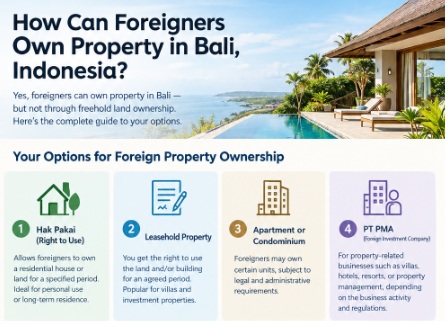
Bali has become one of the most attractive destinations in the world for foreigners looking to live, retire, work, or invest in property. From beachfront villas and modern apartments to private residences in Ubud, Canggu, Seminyak, and other popular areas, the Bali property market offers many opportunities for international buyers.
But one important question remains: Can foreigners own property in Bali, Indonesia?
The short answer is yes, foreigners can legally own or control certain types of property in Indonesia, but they cannot simply purchase land under the same freehold title available to Indonesian citizens. Indonesian property law provides several legal structures for foreigners, depending on whether the property is intended for personal use, long-term investment, or business purposes.
This guide explains the main options for foreigner property ownership in Bali, the legal structures available, and the important things you should understand before buying.
Can Foreigners Own Land in Bali?
Foreigners cannot hold Hak Milik (Freehold Ownership) over land in Indonesia. Hak Milik is a form of land ownership reserved for Indonesian citizens.
However, Indonesian law provides other legal rights that allow foreigners to own a residence or obtain long-term rights to use property.
The main options include:
- Hak Pakai (Right to Use)
- Hak Sewa (Leasehold)
- Ownership of certain apartment or condominium units
- Establishing an Indonesian foreign-owned company, commonly known as a PT PMA, for appropriate business activities and property structures
The current framework is primarily based on Government Regulation No. 18 of 2021, which replaced earlier regulations concerning foreign ownership of residential property.
1. Hak Pakai – Right to Use
One of the most important legal structures for a foreigner who wants to own a residence in Bali is Hak Pakai, or Right to Use.
Under PP 18/2021 ( Government Regulation ) , foreigners who possess the required immigration documents may own residential houses or residences under the permitted land rights framework.
Hak Pakai does not mean that the foreign buyer receives Indonesian freehold land ownership. Instead, it provides a legally registered right to use the property for a specified period, subject to Indonesian land regulations.
This option can be suitable for foreigners who intend to:
- Live in Bali
- Have a long-term residence
- Purchase a villa for personal use
- Establish a legally documented residential property interest
The duration, extension, renewal, land status, and administrative requirements need to be checked carefully for each individual property and transaction.
2. Leasehold Property in Bali
Another common option for foreigners is leasehold, generally structured through a Hak Sewa or contractual lease arrangement.
With a leasehold, the foreign buyer does not own the underlying land. Instead, the buyer obtains contractual rights to use the land and/or building for an agreed period.
Leasehold properties are popular in Bali because they can provide access to villas and commercial properties without requiring freehold land ownership.
A lease agreement should clearly specify:
- Lease period
- Payment schedule
- Renewal options
- Property usage
- Construction and renovation rights
- Responsibility for taxes and maintenance
- Subleasing or rental rights
- What happens when the lease expires
- Transfer or assignment rights
A professionally prepared agreement is essential because the quality of the legal documentation can significantly affect the buyer’s rights.
3. Buying an Apartment or Condominium
Foreigners may also be able to own certain apartment or condominium units (satuan rumah susun) under Indonesian regulations, provided the relevant legal and administrative requirements are satisfied.
PP 18/2021 specifically recognizes the ability of foreigners with the required immigration documentation to own qualifying residential property.
However, not every apartment project in Bali automatically qualifies for foreign ownership.
Before purchasing an apartment, a buyer should verify:
- The legal status of the building
- The land title
- The type of ownership certificate
- Whether the project is legally available to foreign buyers
- Applicable government requirements
- Building and zoning approvals
This is why working with a qualified property lawyer or notary/PPAT is strongly recommended.
4. PT PMA for Property Investment and Business
Foreign investors who want to operate a property-related business in Bali may consider establishing a PT PMA (Foreign Investment Company).
A PT PMA is an Indonesian legal entity established under Indonesian investment and company regulations. Depending on the business activity and applicable regulations, a company may hold certain land rights such as Hak Guna Bangunan (HGB) or other permitted rights.
This structure can be relevant for investors developing or operating:
- Villas
- Hospitality businesses
- Resorts
- Property management businesses
- Commercial property projects
- Other permitted real-estate-related activities
However, forming a PT PMA simply to bypass restrictions on individual land ownership is not a shortcut. The company’s business activities, licensing, investment requirements, land title, zoning, and tax obligations must all be properly structured.
What About Using an Indonesian Nominee?
Foreign buyers sometimes hear about “nominee ownership”, where an Indonesian citizen is registered as the owner of land while the foreigner provides the money.
This arrangement carries significant legal and financial risks.
The foreign buyer may not have the same legal protection as a registered land-right holder, and the arrangement can create serious problems involving control of the property, inheritance, disputes, and enforceability.
For this reason, foreigners should obtain independent legal advice rather than relying on informal nominee arrangements.
What Documents Should Foreigners Check Before Buying Property in Bali?
Buying property in Bali should involve more than simply checking the villa and negotiating the price.
Before committing to a transaction, buyers should conduct proper legal due diligence, including checking:
Land Certificate
Verify the underlying land certificate and determine whether the property is associated with Hak Milik, Hak Pakai, HGB, or another permitted land right.
Zoning
Make sure the property is located in an area where the intended use is legally permitted.
This is particularly important if you intend to operate the property as a villa, holiday rental, hotel, or other commercial accommodation.
Building Permits and Approvals
Check the property’s building documentation and applicable approvals.
Seller’s Ownership
Confirm that the person or entity selling the property has the legal authority to transfer or grant the relevant rights.
Taxes and Outstanding Obligations
Check whether there are outstanding land, building, or other tax obligations associated with the property.
Lease Terms
For leasehold properties, carefully review the remaining lease period, renewal mechanism, transfer rights, and responsibilities of both parties.
How Does the Property Buying Process Work?
Although the exact process depends on the property and ownership structure, a typical Bali property transaction may involve:
1. Define your objective
Decide whether you want a property for personal residence, long-term investment, rental income, or business purposes.
2. Select the appropriate legal structure
Determine whether Hak Pakai, leasehold, apartment ownership, or a company structure is appropriate.
3. Conduct due diligence
Have the land certificate, zoning, building documents, ownership, and relevant permits checked.
4. Negotiate the purchase or lease
Agree on the price, payment schedule, duration, conditions, and other contractual terms.
5. Engage a qualified notary/PPAT and legal professional
The transaction should be properly documented and registered according to the applicable Indonesian regulations.
6. Complete payment and registration
The relevant legal documents, taxes, registrations, and administrative requirements should be completed before the transaction is considered finalized.
Is Buying Property in Bali a Good Idea for Foreigners?
Bali offers a wide variety of property opportunities, but foreign buyers should approach the market differently from buying property in countries where foreigners can freely purchase freehold land.
The most important point is to understand what you are actually buying.
A beautiful villa does not necessarily mean you own the underlying land. A long lease is different from freehold ownership. A PT PMA is different from personal ownership. And a property marketed as “foreigner friendly” should still be independently verified.
Indonesian property regulations are also subject to changes, so buyers should confirm the latest requirements before signing a transaction. PP 18/2021 remains a key legal reference, while implementing regulations and administrative procedures may be updated over time.
Final Thoughts
So, can foreigners own property in Bali?
Yes, foreigners can legally acquire certain property rights in Bali, but not through ordinary freehold Hak Milik land ownership.
The appropriate structure depends on your purpose, immigration status, property type, investment strategy, and the legal status of the property.
Whether you are looking for a private villa in Canggu, a residence in Ubud, an apartment in Seminyak, or an investment property in Bali, proper legal due diligence should always come before making a payment.
At My Bali Property, we help international buyers understand the Bali property market and explore property opportunities that match their requirements.
If you are looking for property for sale in Bali, contact our team to discuss available villas, land, apartments, and investment opportunities.
Disclaimer: This article provides general information and is not legal or tax advice. Indonesian property and investment regulations can change. Foreign buyers should obtain independent advice from a qualified Indonesian lawyer, notary/PPAT, and relevant professionals before completing a property transaction.
Agen kami siap membantu Anda mendapatkan properti idaman Anda!

Gede Andryan
Head Marketing





 Gede Andryan
 Ayu Laksmi
 Yuti
Yuti
Saat ini belum ada komentar